
Great Enough
Looking back at Bandon Dunes with modern context

DISCLAIMER: I love Bandon Dunes. It wasn’t only the first course made at the resort but also the first one I ever played. I was a freshman in high school and remember everything about that windy, late October day. It was the day I met Migs, a middle-aged 5’3” Staten Island native turned Oregonian expat who was my first and only caddie I’ve ever had carry my bag anywhere. I turned the corner after blowing up on the par-3rd 15th (just like we all do) to see the ever-picturesque 16th, and I felt like I had found something too good to keep secret.
It was the day I knew golf would be a constant in my life, and hopefully at some point, a career. Without Bandon, I might as well think of another alternate reality in which I wouldn’t nearly have as fulfilling a life playing and studying the game I love.
With some time and perspective between then and now, almost 11 years have passed, and with it, personal views have changed. It feels sacrilegious to discuss how the first course at Bandon Dunes isn’t perfect, to find kinks in the armor. It feels like remembering a beloved high school teacher who, after recollecting what they said all those years ago, is actually not as good a person as one once believed. I still think my English teacher, Mrs. Anderson, graded student athletes badly because they could skip her class for games.
For the longest time, Bandon Dunes held a certain stature that was untouchable. It still is for Bay Area loyalists reminiscing about a time when there was only one course, one place to stay, one place to grab a Guinness, and a couple of pictures taken on a Nokia to show the weekly foursome back home. For most of its tenure so far, “Bandon”, as it's referred to in the company of its connected neighbors, has been an appropriate introduction into the world of Dream Golf. Yet, it’s just great enough for the majority of the golf world to have passed over all its maladies as though the main lodge had lamb’s blood on the doorposts.
Hindsight is 20/20, and I’m admittedly sitting squarely in the cheap seats. Whether highly ranked in a legitimate publication or just the local track, anyone can find fault after playing and studying one course for a decade. Our brains are designed to get used to intricacies and imperfections through repetition.
While paying my respects to the Don, so to speak, in the family of destination golf locations around the globe, I believe it an important mental exercise to dive into why Bandon’s once-cemented place has lost pole position to more modern architectural expressions and to diagnose the real root of its stardom. Although this course created the industry, it’s far different than what the standard would become.
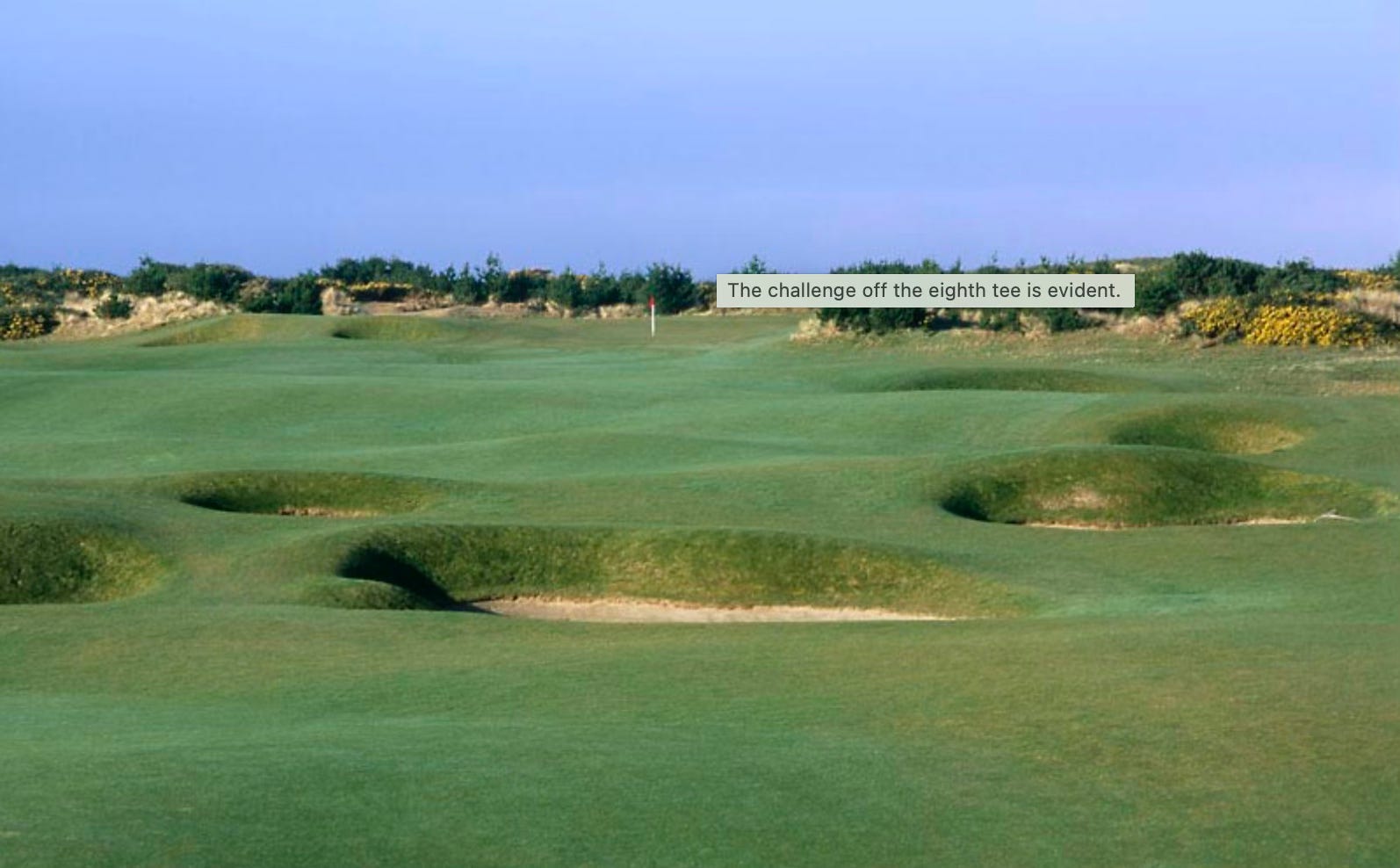
The routing, a seminal piece in any course makeup, has far too many glitches to hold up against the other courses at the resort. Take the first hole, for example. Hundreds of available acres to the left and right, and players teeing off of the short par-4 have to caution against flaring one into a parking lot. This became such a hazard that the resort felt the need to add bunkers to the hole’s right side in 2005.
David McLay Kidd, architect of Bandon Dunes then suddenly transformed into overnight wunderkind, probably wishes he could go back in time and make a different decision behind the placement of the 2nd tee, so much so that in Bandon’s renovation ahead of the 2020 U.S. Amateur, there emerged a new alternate tee just a few steps up the dune to the right. It was a lost opportunity for the course to show off not only its most impressive topographical feature, a dune ridge that spans almost the entire length of the property, but also to prove its promised Scottish-like sensibilities. Laboring green-to-tee transitions can also be seen from the par-3 6th to the par-4 7th, and the par-3 12th to the par-5 13th.
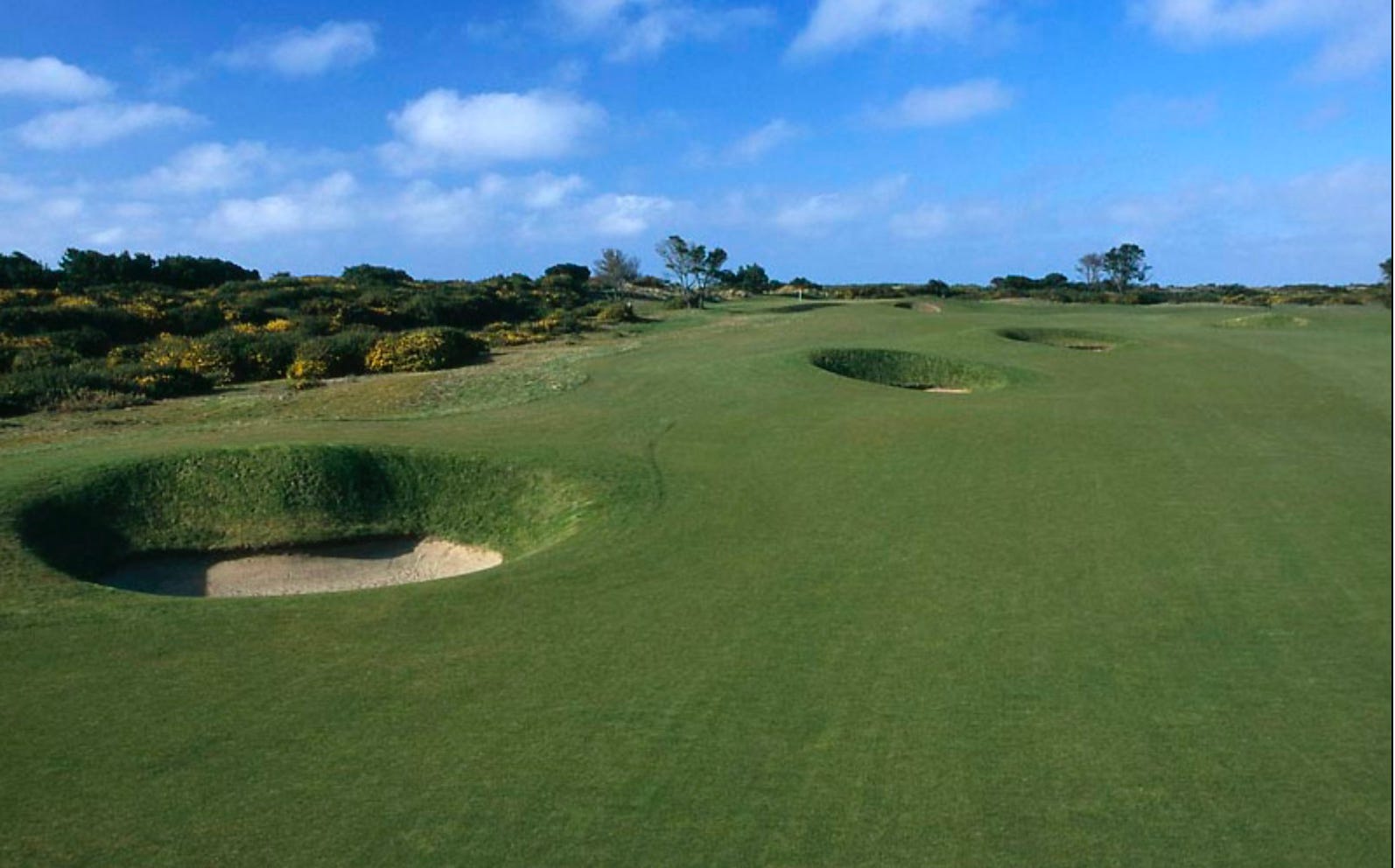
The original bunkers have since all been replaced by the renovation, leaving behind Kidd’s more modern interpretation of natural-looking hazards, but they were some kind of grass-faced, pseudo-pot style that would get laughed at if implemented on course designs even 10 years ago. In Kidd’s defense, the only way anyone would’ve seen rugged, erosion-torn bunker shapes so common in today’s offerings would’ve necessitated either a trip to the British Isles or a membership at Sand Hills Golf Club. It wasn’t the shapes that caught people off guard—they recognized those—it was the placement that pressed players to play a different style of golf than what they’d been used to.
Next to his father, Jimmy Kidd, David’s right-hand man on the project was a seasoned shaper by the name of Jim Haley. His experience came under the tutelage of Rees Jones, son of famed architect Robert Trent Jones, spending over a decade leading projects. It’s important to note the comedic irony involved. Besides the architect, the main character in crafting the course heralded as a bastion of minimalist design made his career building tight, penal, and manicured golf courses. Haley would implement many similarities from his work with Rees, mainly into the green surrounds.
Those more accustomed with Bandon’s present visuals might forget the artificial containment mounding—a common and oft-derided feature of Rees' style—featured on the left side of the par-3 15th, which was then knocked down in the renovation.
There’s no other course at the resort that has gone through such extensive changes as Bandon Dunes. To put it bluntly, masterpieces normally don’t get stripped down to the studs and put back differently.
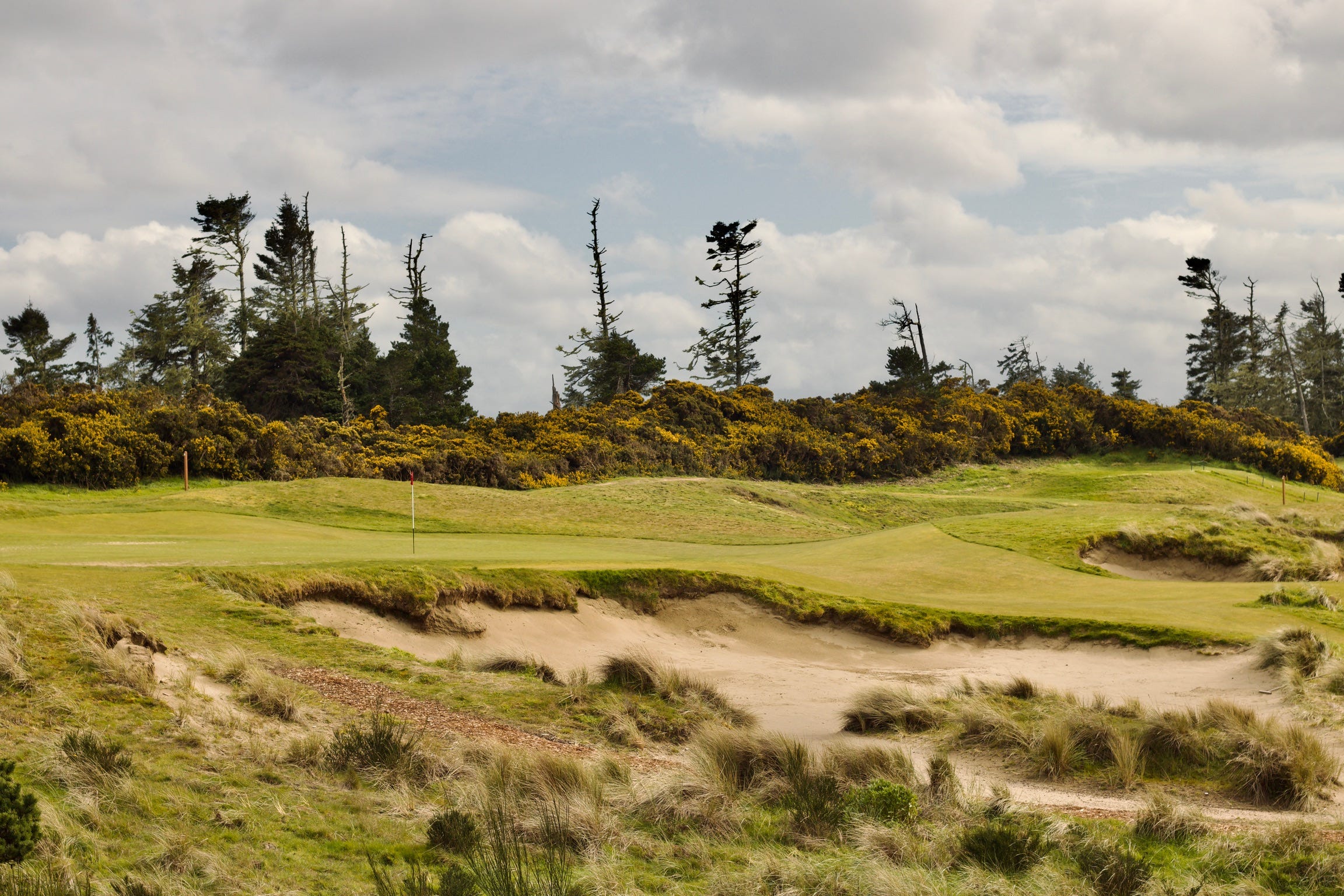
Let’s all close our eyes for a second and imagine if Kidd was given the exact same piece of land after over 30 original designs and 26 years of experience and stylistic change. The finished product would resemble Gamble Sands, Mammoth Dunes, Graybull, or any other recent design of his more than what was opened to the public in 1999. And although these newer designs might be more in tune with contemporary status quo, they wouldn’t have resonated with Bandon’s clientele at that time.
In fact, the very reason why Bandon is successful is precisely because it bridged the gap between the antiquated and the contentious. It was necessary for the “retail golfer”, a well-known title used by founder Mike Keiser for his then-proposed resort's specific demographic, to learn how to crawl before learning how to walk, architecturally speaking. The majority of the golfing public only thought of golf architecture when they skimmed through Ron Whitten’s articles in Golf Digest. Bandon was the training wheels.
The good holes far outweigh the mediocre ones. If Keiser only had the money to build the par-4 5th, par-3 12th, and par-4 16th, it still would’ve changed the face of golf.
At a trade show in Portland shortly before the resort’s opening, then General Manager Josh Lesnik and Director of Outside Happiness Shoe Gaspar, holding the title of first Caddie Master, showcased a picture taken by Wood Sabold of the newly constructed par-3 12th featuring ballooning, cumulonimbus clouds of orange and purple looming over the Pacific. Passerbyers assumed it was a painting, and, after some discussion with the more curious, couldn’t come to grips with the reality that the picture was taken in Bandon. “It’s always dark and rainy in Bandon. That can’t be it,” multiple media members commented as they disengaged from the conversation.
The course proved something far greater than what good architecture can achieve by itself. It opened the possibility that a “build it and they will come” business model can work.
Bandon Dunes wasn’t successful based on its architectural prowess alone. There was something much bigger than that going on. The pure shock and awe factor of spending nine hours in a car to then arrive in a lonesome crabbing town on the southern Oregon coast and hit off of a grass you’ve never heard of before felt, for the first time, similar to the links experiences in which it was based overseas. That is why people long to go and then return year after year. For a Chicago businessman to have transformed a wind and rain-ridden coastline almost exclusively visited by local kids on dirt bikes into the template for almost every golf destination in North America made in the 21st century is impressive in and of itself.