
Ireland - Part 3
The Ongoing Search for Craic

There are only a couple places on earth that hold such sanctity for the game as Ballybunion. Tom Coyne wrote in A Course Called Ireland, “I’m not going to tell you much about the Ballybunion links. If you’ve played it, you know. If you haven’t, I’m sorry. Other places I had visited were Irish links golf courses; to me, Ballybunion was Irish links golf.” Mike Keiser was so awestruck that playing here was the genesis of a true, seaside links course in America, resulting in the creation of Bandon Dunes Golf Resort as we know it. It’s normally rated within the top 20 courses in the world and still has a membership fee of €500 a year. Its accolades are prestigious. Its missionaries are numerous.
It was quite the entertaining drive from Killarney to Ballybunion. The classic, Irish country roads made my father, our ever-courageous driver, unseasonably nervous for someone with a private pilot’s license—this being evident from him confessing “I found out that I shouldn’t be scared of the Irish drivers but of the American ones”.
It’s almost instantaneous, the transition from country to linksland, for which the road leads to. From almost out of nowhere, the clubhouse emerges in front of us. Excitement doesn’t quite paint the full picture. There was numbness involved. It was almost too important of a moment to take in all at once. This tee time first came across my father’s inbox about two years ago when checking up with an old friend whose father’s membership at the club spanned eons. So after keeping in contact, the opportunity arose to ask for a little favor: his father to host us at Ballybunion. The Irish hospitality showed through as the first words in the response were “OFCOURSE”. But it was brought to a whole other level of welcoming when we saw him waiting outside the front door of the clubhouse for us with the captain of the club and the head professional, greeting us with “We’re glad you could make it”, and gifting us with yardage guides stuck inside beautiful, leather yardage guide books with the Ballybunion logo stamped on their faces.
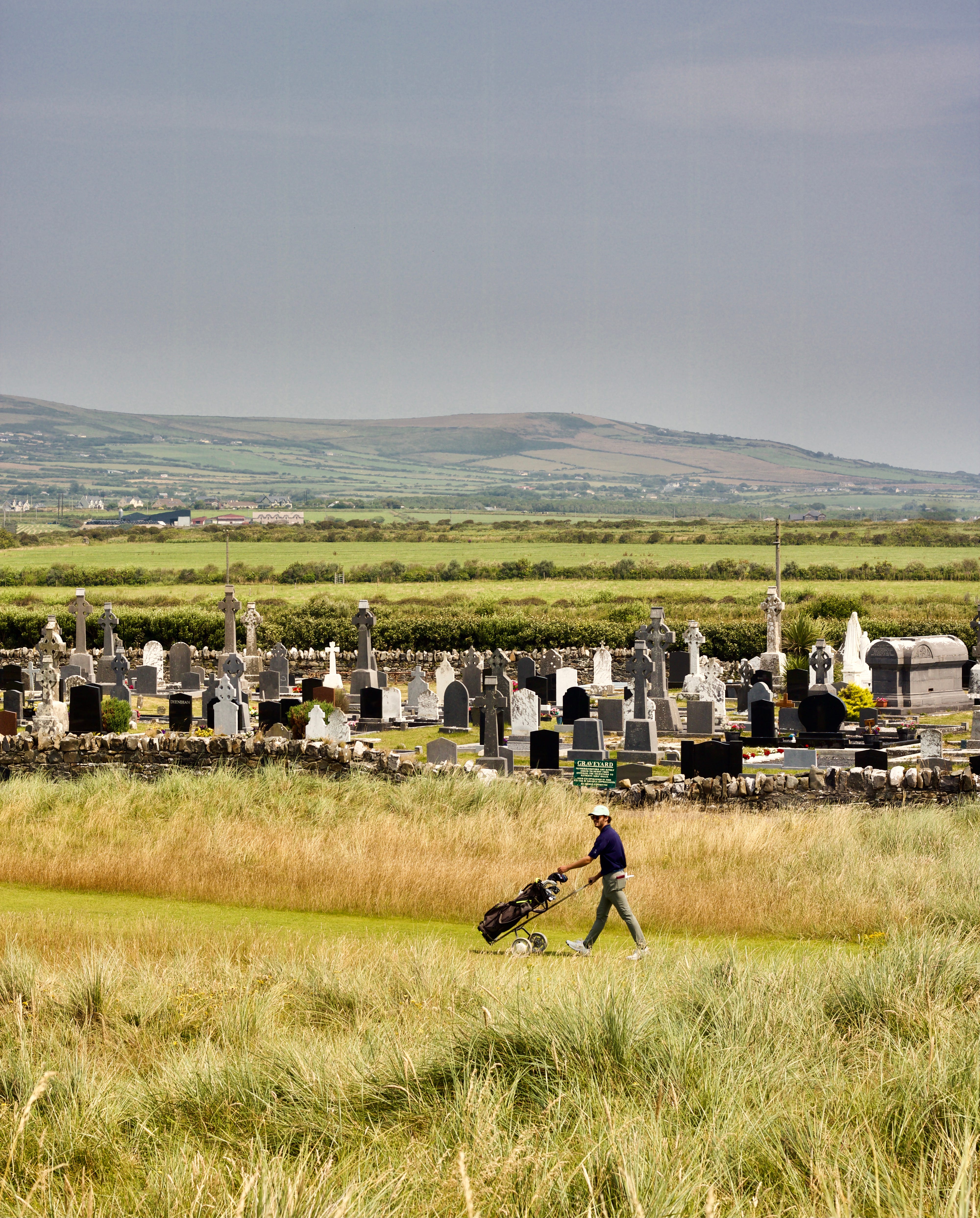
We were paired up with John, a man that resembled more bear than a human, a loyal member for the last 23 years and is on the greens committee. We knew the protocol about first tees here was a little different than back home, there being no room for a breakfast ball or anything hedonistic like that. If it’s playable then play it. But the hundred year old graveyard off of the first fairway on the Old Course was not in play, and after slicing my first tee shot of the day, I had to take a dose of humility, club down, and then immediately pump another one out of bounds right on top of the first one. John said, “That’s death over there”. Touché, John.
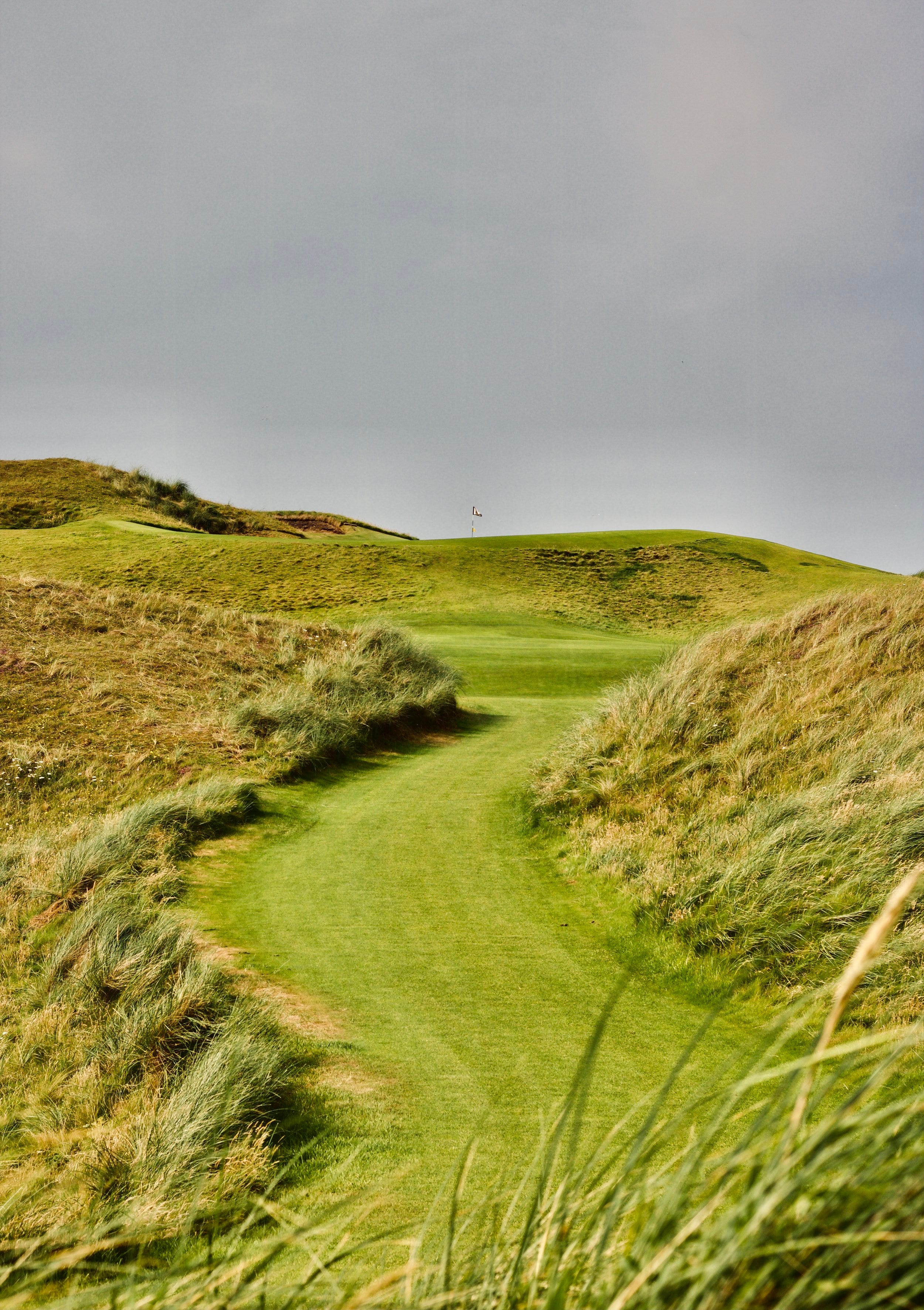
The walk is amazing. One moment you’re either scaling dunes up to the 2nd green, teeing off directly over the preceding green twice in a row on the 4th and 5th holes, or waving to the beach walkers on the 7th. I couldn’t help but think of all the different holes I’ve played that are based off of this one place, and at the same time, surprised by the holes that looked completely individual—like nothing I’ve ever seen before. Playing the par-4 7th, I saw where Tom Doak might have gotten the idea for the par-4 4th at Pacific Dunes. Playing the par-5 16th or the famous par-4 11th was like being transported to a different planet. “If Scottish links are classical music, Irish links are rock and roll”, Jack said while hiking up to the green on the par-3 12th, a shot where if one’s ball takes a sharp right turn off the clubface results in having to hit out of a pit that seems like someone actually thought they could dig their way to China and gave up a couple weeks in.
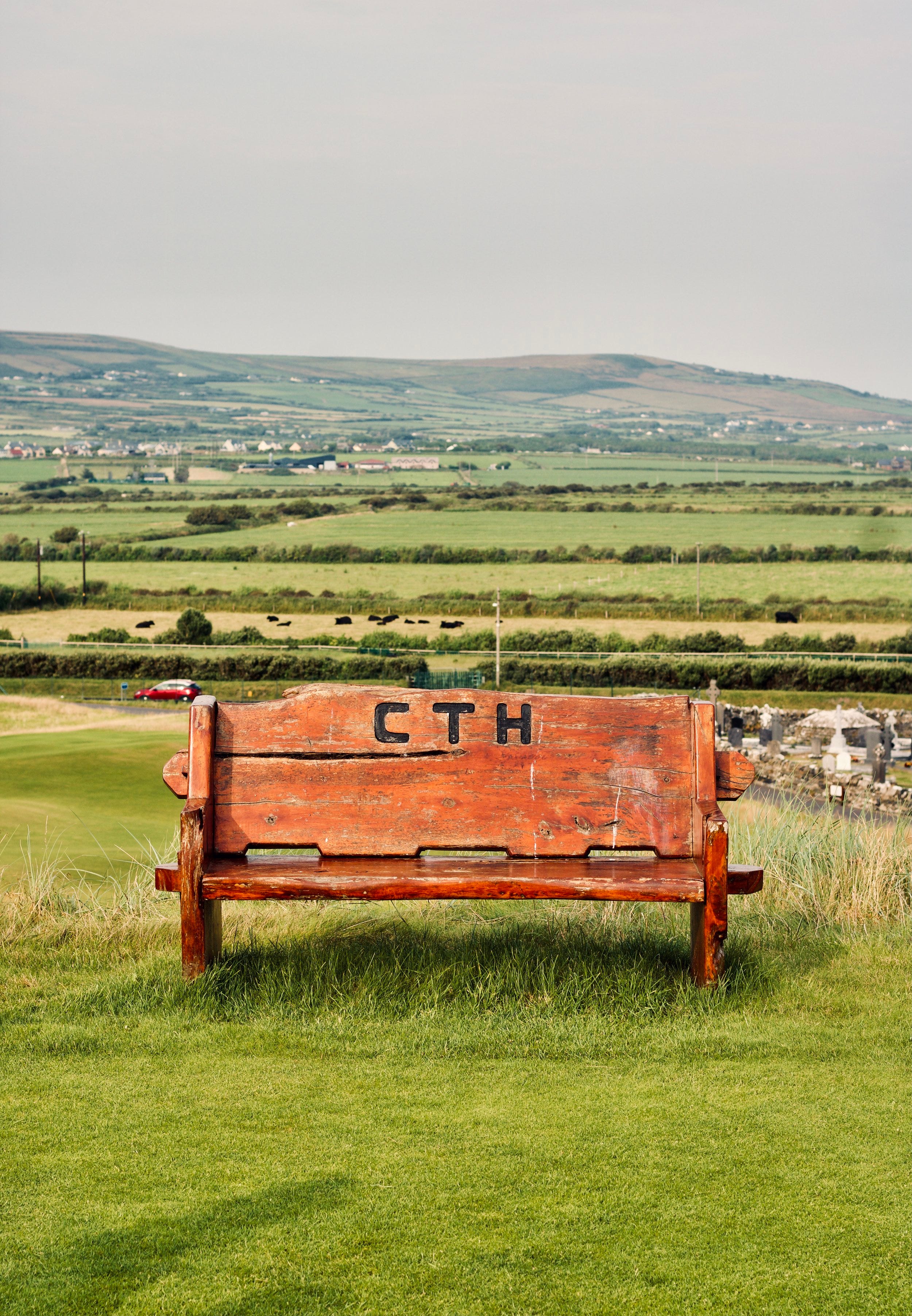
There’s a bench located on the far back tee of the par-4 17th that has three letters engraved into its face, reading “CTH”. Atop the tallest dune on the Old Course, the view across the property was almost fully unobstructed. We were struck where we stood. I could see the beautiful par-3 15th, my personal favorite, shimmering in the afternoon sunlight. I could see players on the 11th tee, phones in hand, taking as many pictures and videos as their hearts desired. And as I started to look at the hole in front of me, it seemed almost sacrilegious to tarnish such an out of body moment with the constant clattering and clicking of my camera. I looked at John and saw a boy who was filled with giddiness, as though he was watching his soon to be wife walk down the aisle rather than a golf hole he had played countless times before. “Funny isn’t it.”, John said with a laugh.
“What’s that?” I responded with a little confusion in my voice.
“Closest To Heaven. That’s what the bench says. I just think it’s hilarious that they put it next to where people really go to heaven.”, referring again to the graveyard off the 1st, both the routing and the joke having come full circle.
We found craic everywhere we went, and it had a way of making itself known in the strangest of places. Whether it be listening to a traditional Irish band in Monroe’s, one of Galway’s most famous pubs, taking a tour around the Ring of Kerry, or simply playing some great golf, Ireland is packed with good times for all.
But what struck me was how often craic would wield its head amidst conversations with the Irish. They might be considered tough eggs to crack by some. But once they do start to crack a little bit, then their gooey insides of warmth, hospitality, and a tremendous amount of humor will overwhelm any traveler with endearment. So don’t worry, there’s plenty of craic to go around.
If you liked this piece, please let us know by tapping the heart button below. It helps more people find our writing. Thanks!
