
The Greatest Potential
Corn, cows, and the best location for golf in America

It was good fun telling fellow golfers that I would be going on a golf trip for a week and half. After the obligatory question, “Where are you headed?” I enjoyed leading them on.
“Oh it’s a pretty remote place, you’ve probably never heard of it.” Since every hack with Instagram now is an expert regarding golf travel, the usual response was, “Bandon? Sand Valley? Ireland? Turkmenistan?”.
Nebraska. I imagine a cartoon rushing through their heads with golfers using long stalks of corn as clubs while hitting over a single-toothed farmer playing the harmonica while, in reality, Nebraska has some of the best golf in the United States. Even more importantly, it has the potential to be the best single collection of golf courses on the face of the planet.
I’m in love with Nebraska. Usually when I reveal my affection for this underdog state randomly in conversation, the inevitable eyebrow raise is never too far behind. For 99% of Americans, Nebraska is a state you fly over, or sadly, am forced to drive through. Staying in Nebraska, let alone wanting to be in Nebraska, seems silly to most. “Nebraska…the good life”, yeah right. What can be so good about a place many people simply look at from 30,000 feet?
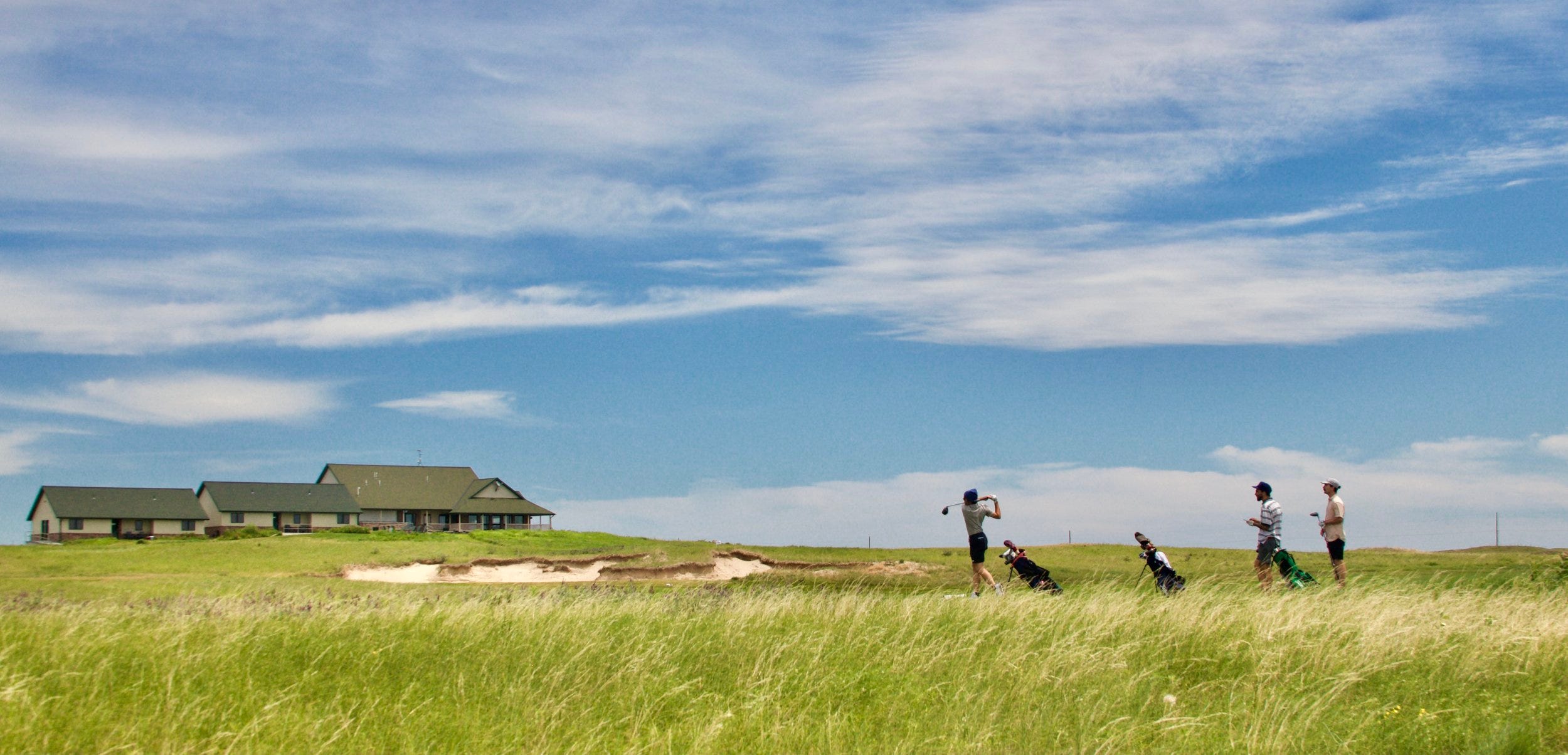
When I ask people if they’ve ever heard of a place called the “Sandhills”, the answer is always no. Little do they know that this area takes up almost one third of Nebraska. The Sandhills were formed the same way the dunes in Scotland, Ireland, and Long Island were: the movement of water. Yet instead of the Atlantic or Pacific Ocean as the backdrop, it’s the vastness of the prairie.
The Last Glacial Maximum, an “ice age” in other words, swept through North America about 21,000 years ago leaving miles of ancient sand deposits. This is undoubtedly one of the best kept natural secrets in the United States, not just for ranching, hunting, or even admiring, but for the game of golf as well.
So three of my best friends and I, along with a 1999 Four Winds Hurricane we nicknamed Thor due to its valiant effort in a harsh, midwestern thunderstorm, rocketed out of Omaha and onto the I-80. Our mission—to trek out to the middle of nowhere and experience what the forgotten state had to offer.
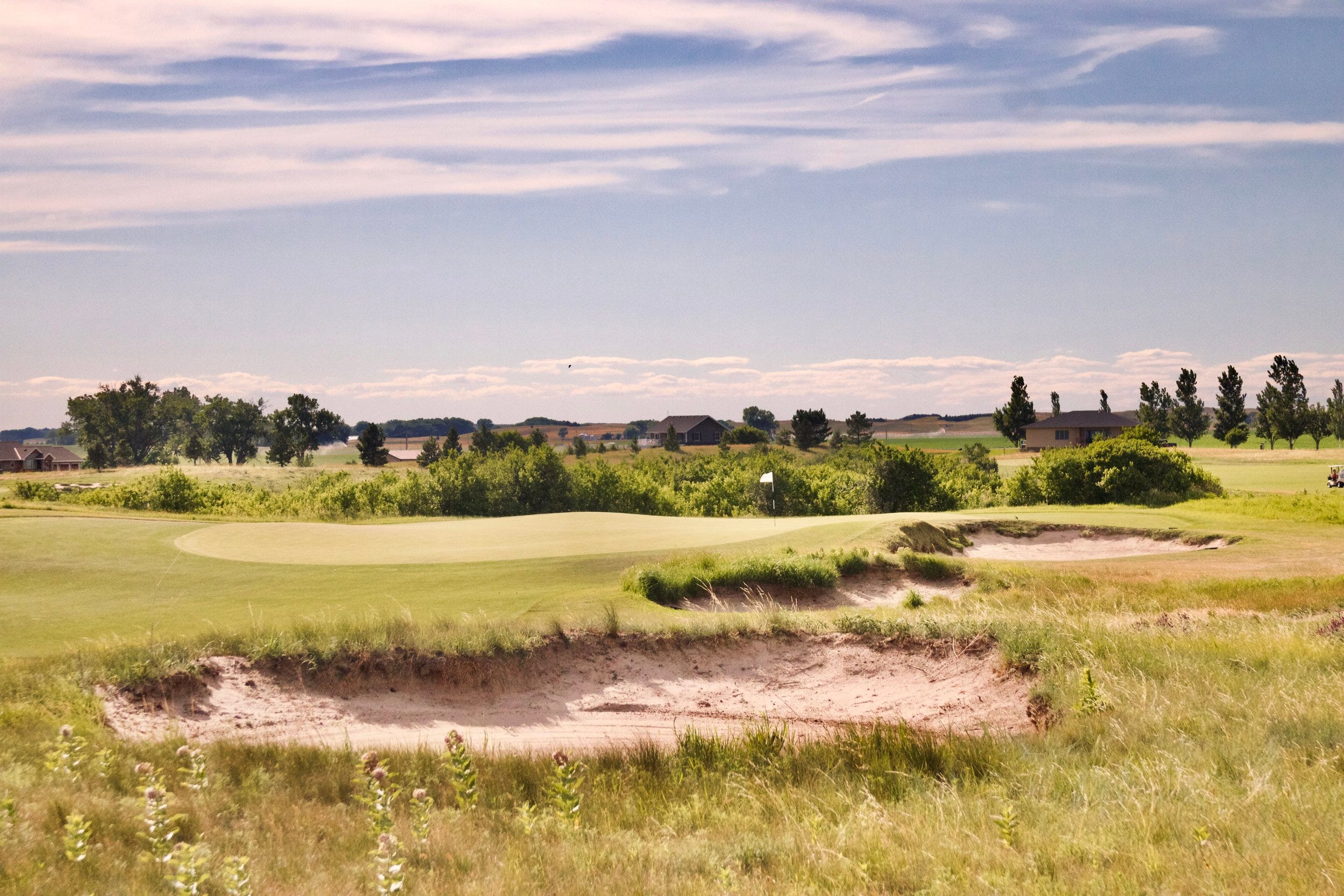
The ingredients needed for superb golf aren’t as complicated as the 1980s and 90s might have made it up to be. Acquire a site composed of mainly sand, add some good land movement like flat bits for fairways and greens, and an architect to cook up a routing that can highlight certain flavors—no elaborate fountains or unnecessary water features needed. The word “championship” doesn’t need to make an appearance and the golf certainly doesn’t need to be a test emulative of something professionals would find difficult. The Sandhills most certainly deliver on these prerequisites, and there’s more.
This portion of the state has a significantly sparse population, the biggest city being Valentine with a population of a little over 2,500 people. Other small towns periodically dot the practically uninhabited landscape, Wood Lake being one which holds a smaller population than my graduating class in high school. The natural observation is that this land is waiting for more incredible designs to mark its landscape. The likes of Coore and Crenshaw, Tom Doak, Gil Hanse, and now David McKlay Kidd have all now exposed the world to how good Sandhills golf can be. There’s just a slight problem: you can’t play any of them.
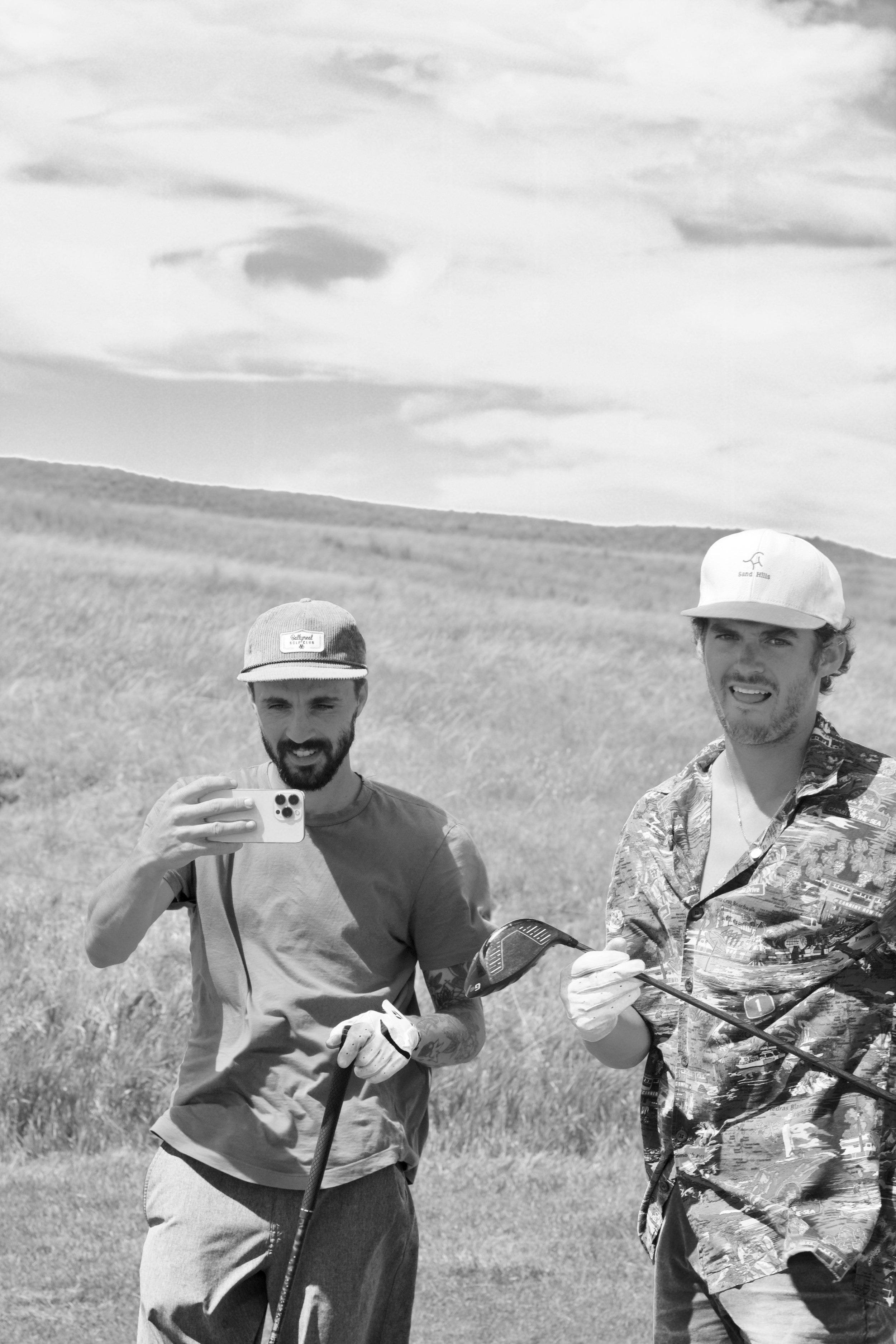
Anyone who knows anything regarding Nebraska golf is bound to ask the question, “So did you play Sand Hills?” (one word for the region, two words for the golf club). We’re a group of 20-somethings with a half-broken RV surviving off of protein bars and Coors Banquet, we didn’t quite get an invite to play one of the most exclusive courses on the face of the planet. Was I constantly annoyed with the world of golf for creating a system of privatized membership during the trip? Yes. Do I get why Sand Hills is a private golf course? Begrudgingly, yes. If it was open for public play, the qualities that make the club as good as it is would eventually dissipate. Like too many people in a national park, I can see its luster being lost.
There are three portraits of what golf can look like in the Sandhills, ranging from the ultra-private to the community course where a tee time and a beer comes in a package deal. All have their place in the Sandhills. And yet, the lower-cost, minimally maintained courses are the ones that truly capture the truest sense of the landscape. Go ahead and strip away the clubhouse, amenities, and on-site cottages. The Sandhills is a stripped environment.
There’s grass, sand, a few trees, cows, barbed-wire, and the wind. The simplicity is its beauty, and it got our group thinking how complicated we’ve made the game. Golfers don’t always need 14 clubs and the latest technology. Barrel-aged old-fashions are pretty tasty after a round, but a Guinness at the local bar does the job. And though this might be hard to hear, they definitely don’t need carts. If the golf courses and culture in the Sandhills emulated the landscape in that way, the game maybe wouldn’t be seen as such a highfalutin pastime.

Let’s do some quick math using three examples of great golfing locations. The Monterey Peninsula is 12 square miles with 9 golf courses on it. Long Island is 1,401 square miles with more than 140 golf courses. The Sandhills of Nebraska weigh in at approximately—drumroll please— 19,600 square miles with only 12 golf courses. If we do some elementary cross-multiplication, and there were the same number of golf courses in proportion to the amount of land there is on Long Island, the Nebraska Sandhills would have around 1,960 golf courses. I see the obvious difference between a major city and a place like Mullen, Nebraska, where the sheriff, butcher, and bartender are all the same person. But in theory, the potential is unimaginable.
Just visualize how well suited the land Sand Hills Golf Club, Dismal River, and Caprock Ranch are. There is almost a statistical certainty that there is better land for golf somewhere in that mind-bogglingly vast spit of land. Who’s gonna find it? Who will be the next young and reckless architect to blow the golf world’s hair back? Who will place the game into the hands of people who have never been able to play before? We are slowly but surely uncovering the lost links Nebraska has been preserving for us. The question is, what kind of golf will the Sandhills be known for down the road?
If you liked this piece, please let us know by tapping the heart button below. It helps more people find our writing. Thanks!
